01
AI that knows your company knowledge
Connect Slack, Notion, Gmail, and documents, and agents answer on top of company knowledge with sources shown on every answer.
People and AI agents work as one team on top of your company knowledge. Permissions differ per person, and your data stays inside your company.
Dasis is a Korean multiplayer AI workspace that teams use together.






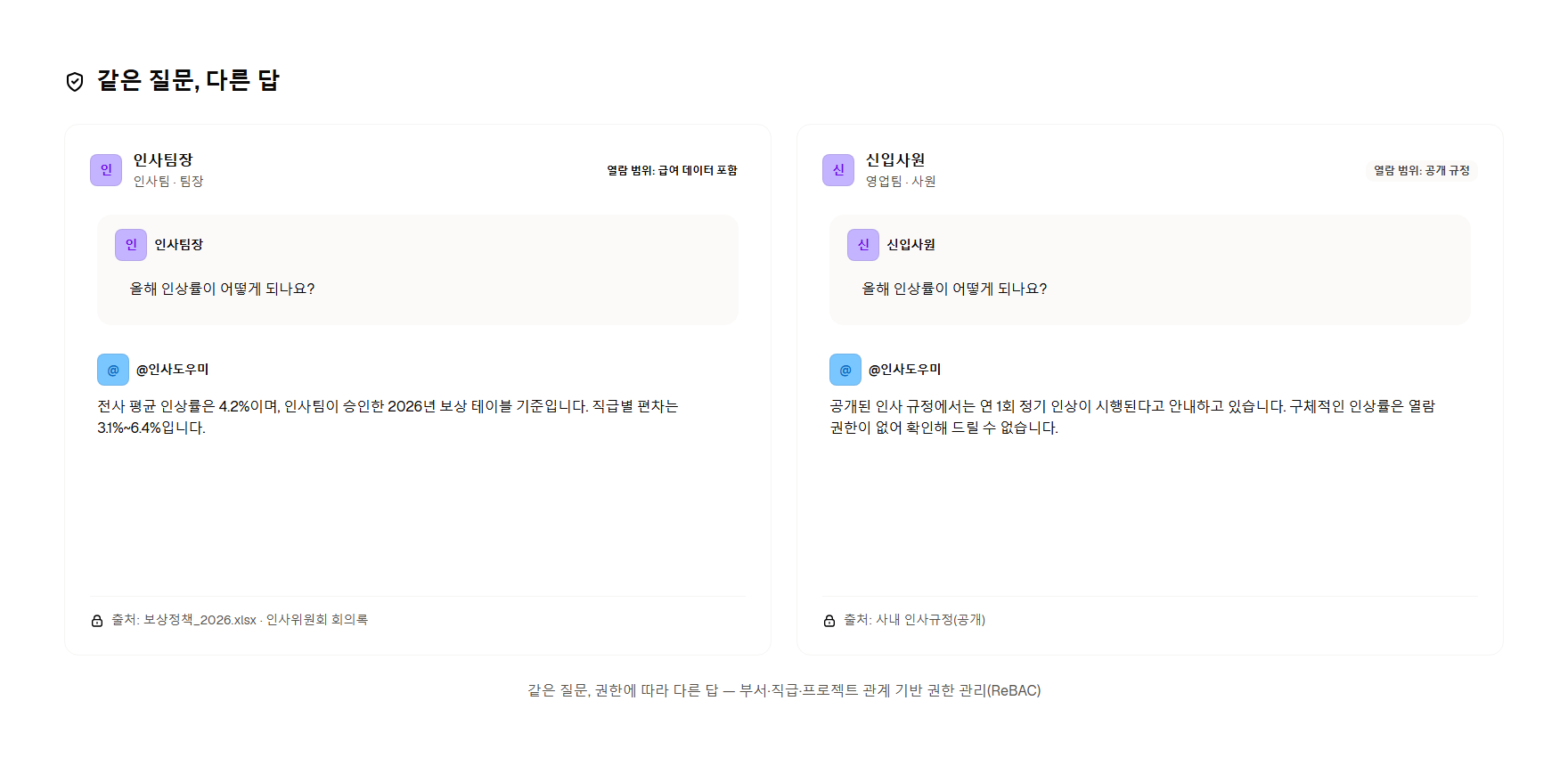
At most companies, AI is still single-player. In Dasis, your teammates and a set of role-separated agents share the same data, tools, and conversations, and work together. And the same agent answers differently depending on the permissions of the person asking.
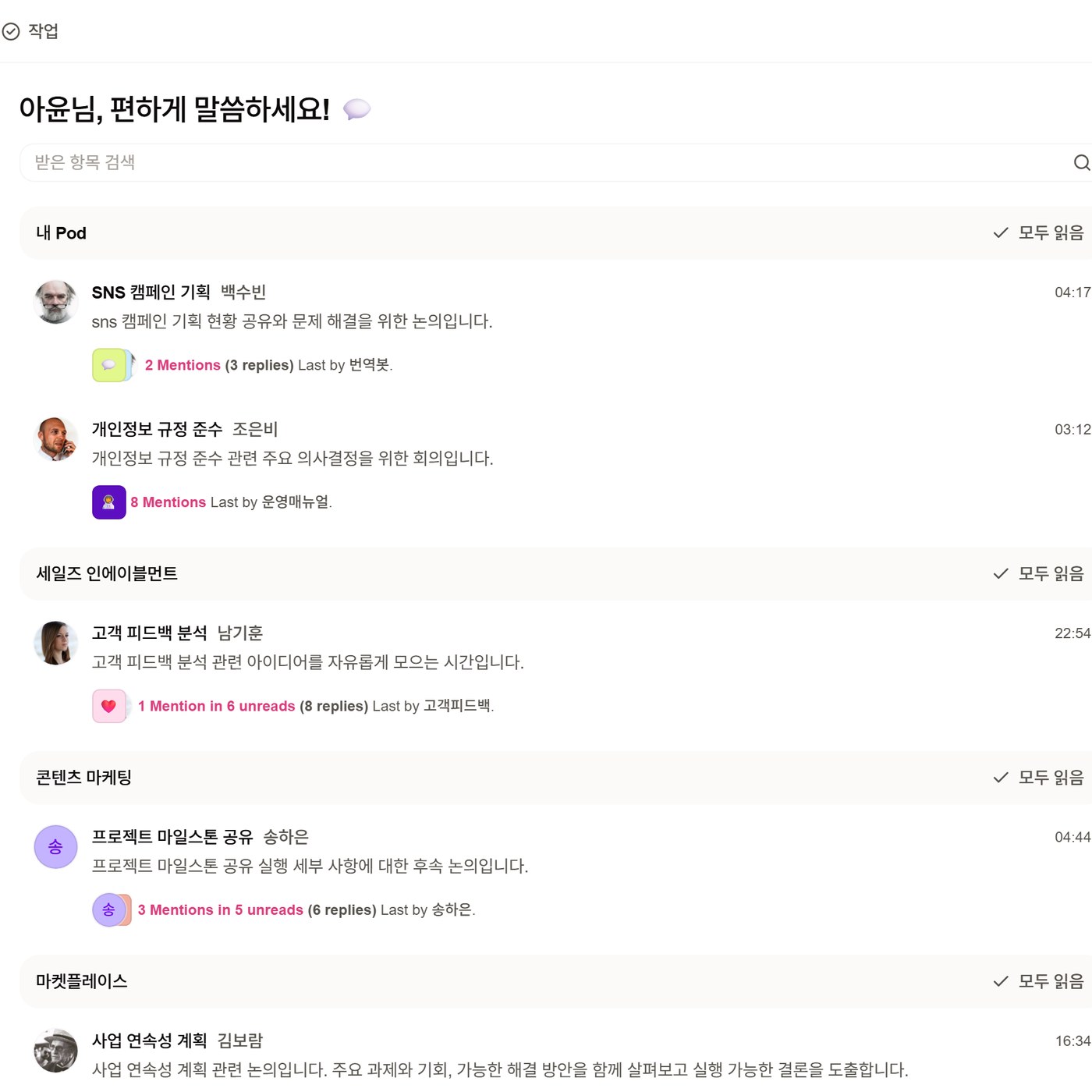
Connect Slack, Notion, Gmail, and your documents, and agents answer on top of company knowledge. Every answer carries its sources, and results the team approves accumulate in the knowledge base. Company data is not used for model training.
Repeated work is saved as a shared skill and runs the same way next time. An agent configuration one person builds can be reused as-is by the whole team, and answers the team approves accumulate in the knowledge base.
Connect Slack, Notion, Gmail, and documents, and agents answer on top of company knowledge with sources shown on every answer.
What an agent can read is determined by department, seniority, and project relationships (ReBAC).
For internal-network environments, deploy on-premises. Scope is confirmed after an environment assessment.
Switch between OpenAI, Anthropic, and Google models; local models are an option under on-premises deployment.
Agents take on the work each department repeats most. Irreversible steps such as sending or approval are confirmed by a person.
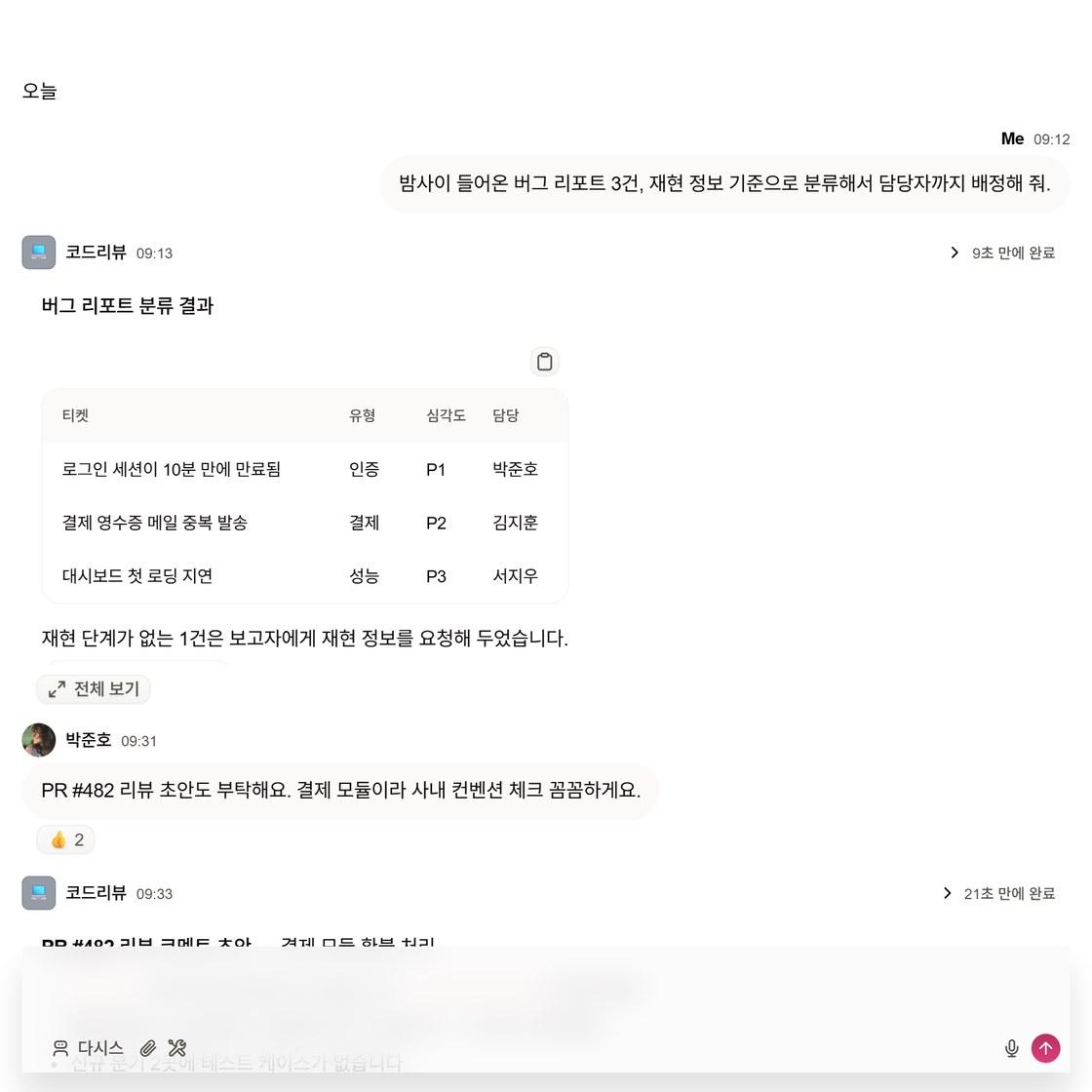
A dual-layer permission model that separates what an agent can access from who is allowed to use it. Tenants are isolated, every read and execution is logged, and irreversible actions do not run without human approval.
The best teams don't put a chatbot on top of scattered knowledge and wait for it to find things. Dasis connects agents to the systems where work actually happens — email, CRM, and documents.
Permissions apply per person, and every execution is logged.
Irreversible actions run only after a person approves them.